RPA rotational

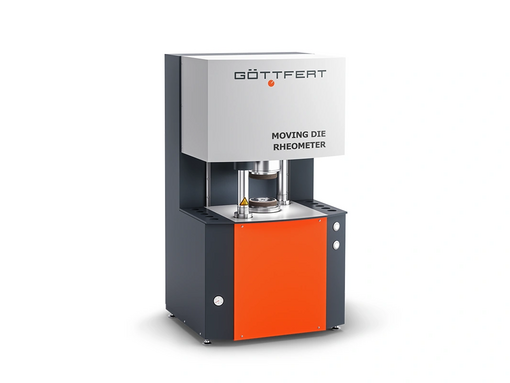
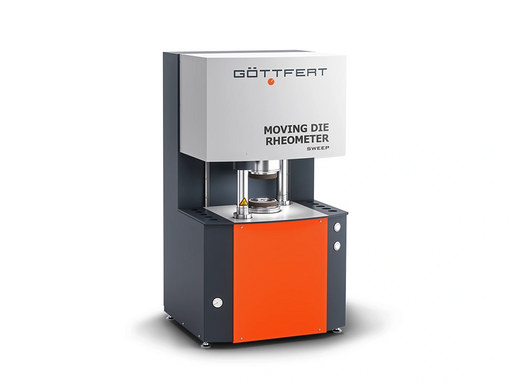
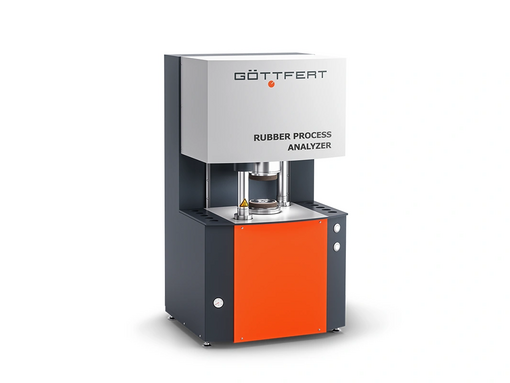
The RPA rotational is GÖTTFERT’s flagship Rubber Process Analyzer. In addition to dynamic viscosity, it can determine shear viscosity through continuous rotational measurements.

  • ASTM D6601
  • ASTM D6204
  • DIN 53529
  • ASTM 6048
  • ASTM D7050
  • ISO 13145
  • ASTM D7605
  • ASTM D5289
  • ISO 6502

Product brochureRheo-Info


Elastomer-Testing instrument RPA rotational

Continuous rotational measurement method

Thanks to its innovative rotational measurement method, the RPA rotational can measure both the transient and steady-state shear viscosity of test materials. Steady-state shear viscosity is usually determined using capillary rheometers. It not only enables complex material behavior to be represented under realistic processing conditions at high shear rates but also provides data that are essential for simulating and designing rubber processing operations.

Fast, intensive shearing processes inevitably cause a significant increase in material temperature due to shear dissipation. Thanks to its unique gradient temperature sensor, the RPA rotational can identify, quantify and correct this often significant disturbance. This feature is unique in the market and enables robust, reliable shear viscosity measurements even at high shear rates.
 

Success Story: Our testing instruments in use

Roundtable: Know-how directly from our lab

Good to know

The RPA rotational is GÖTTFERT’s most versatile RPA and one of the most advanced instruments on the market. Its combination of continuous rotation and dissipation correction is unique. This enables it to measure reliable, corrected shear viscosities comparable to those obtained with a capillary rheometer.


Specification

Product features

  • All the functionality of a conventional RPA
  • High, variably adjustable data acquisition rate
  • Continuous rotation as an additional measurement method for determining transient and steady-state shear viscosity
  • Steady-state shear viscosity is ideally suited to reproducing, simulating and optimizing real processing operations
  • The integrated gradient temperature sensor enables temperature buildup caused by shear dissipation in the sample material to be identified, measured and corrected
  • Reliable, robust shear viscosity data thanks to the dissipation correction
  • Precise detection of transient effects and dissipation-induced scorch
  • Enables new approaches to time- and cost-efficient, data-driven process design, quality control and material development

Measuring methods

  • Continuous rotation for measuring transient and steady-state shear viscosity
  • Isothermal measurements
  • Non-isothermal measurements (temperature sweep)
  • Frequency sweep
  • Amplitude sweep
  • Amplitude-frequency sweep (combined test)
  • Stress relaxation
  • Large Amplitude Oscillatory Shear (LAOS)
  • LAOS evaluation using Fourier analysis (FFT)

for even more functionality

Optional units

  • Autoloader for 5 and 30 samples
  • Volume punch
  • Normal force measurement
  • Torque calibration

Read our three-part RheoInfo series to learn

RPA rotational - Part 1

How continuous rotational measurements can be performed easily and corrected for dissipation

Details

RPA rotational - Part 2

What about the advantages of continuous rotational measurements compared with oscillatory measurements?

Details

RPA rotational - Part 3

How the RPA rotational uses its dissipation correction to characterize scorch problems, among other effects, and enable new solution concepts?

Details

Best practise

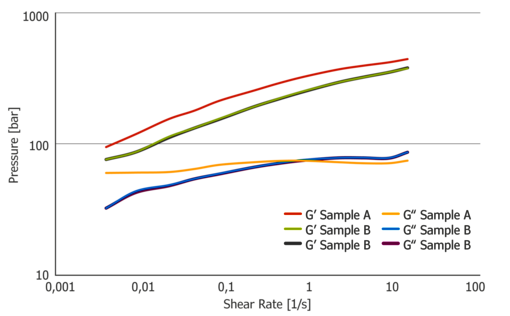
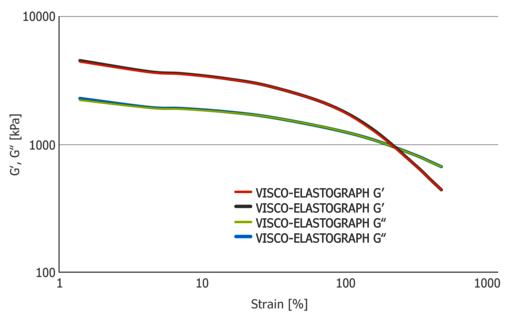
Storage and loss modulus

The storage modulus (G`) measures the energy which is stored in the sample and which will be released after mechanical stress...

Details

Payne-Effect

The Payne-effect describes the alteration in the polymer properties, which are caused of mechanical stress...


Details

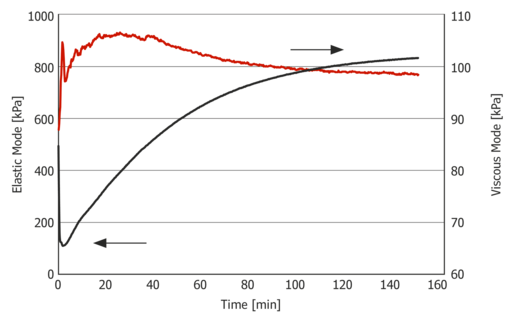
Variable time

Comparable with the usual vulcameter test here the module and the viscosity via the time are being captured...

Details


Sales Service