Part III: Measuring transient effects and predicting dissipation-induced scorch in industrial processes
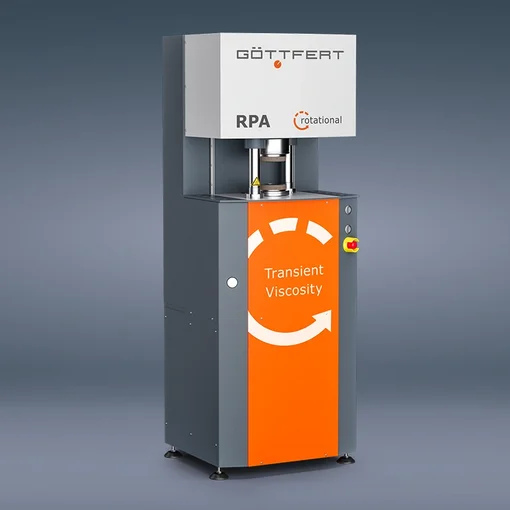
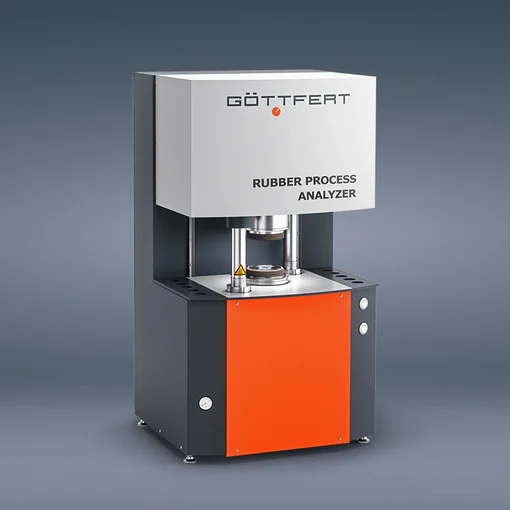
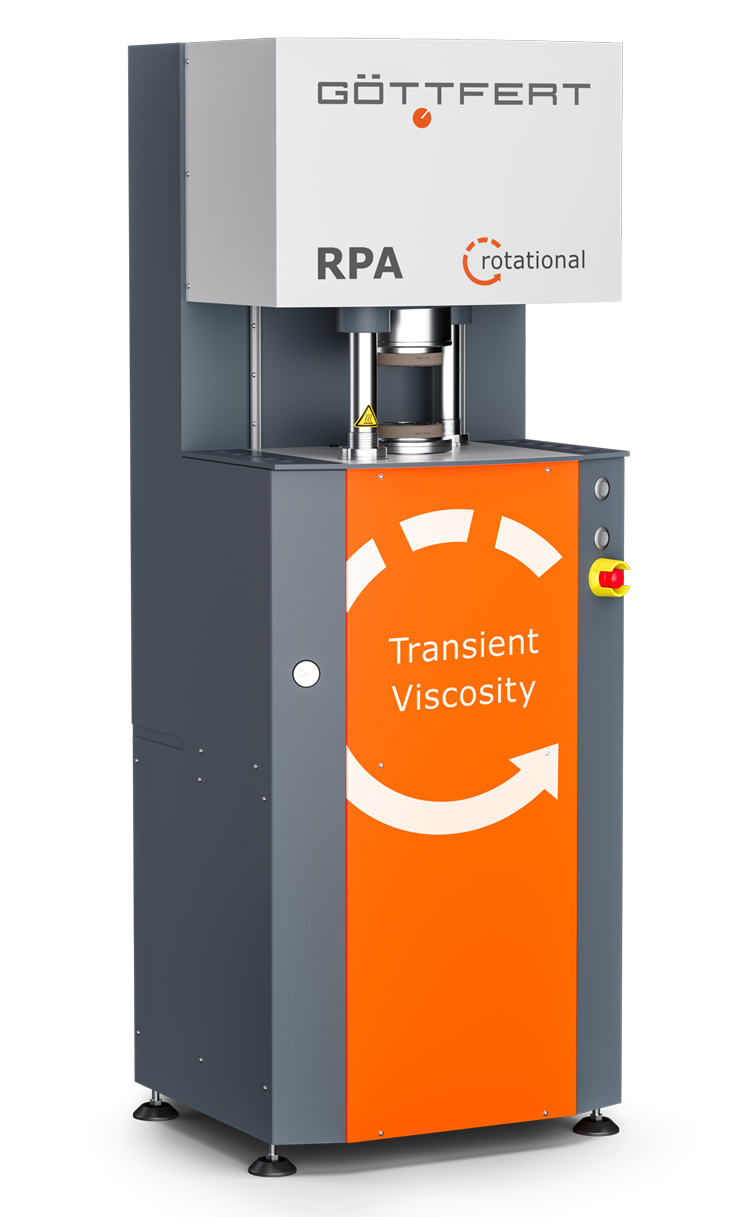
Almost 50 years of experience in the rheological testing of elastomer compounds have led to a new testing instrument – the RPA rotational by GOETTFERT. The Rubber Process Analyzer (RPA) is used to analyze rubber compounds in both the plastic and vulcanized states as well as to characterize crosslinking behavior. In conventional RPAs, the lower die half is driven with a sinusoidal rotational motion (oscillation), while the torque transmitted through the sample is measured at the upper die half. In addition, LAOS (large amplitude oscillatory shear), cure isotherms, temperature sweeps, relaxation, step, or ramp tests can be performed.
The new RPA rotational features a continuously rotating lower chamber equipped with an integrated gradient temperature sensor for determining the temperature buildup created by shear dissipation — a unique feature on the market. Figure 1 schematically illustrates the fundamental difference between conventional RPA designs and the RPA rotational.
In part III of the RheoInfo on the RPA rotational, we will examine transient effects measured under continuous shear as well as dissipation-induced scorch effects, which can be a major thread in industrial production. It will be demonstrated how the dissipation correction of the RPA rotational plays a crucial role in detection and quantification of both these effects.
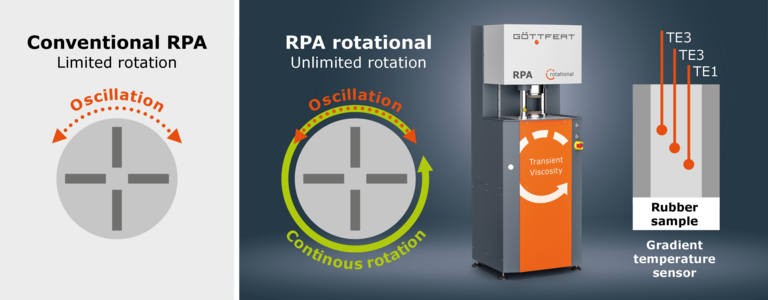 Figure 1: Conventional rubber process analyzers (RPA) are rotational rheometers with limited rotation (left side). Accordingly, measurements are mostly limited to oscillatory stimuli. The RPA rotational (right side) is one of the first RPAs with a moving die that can perform rotations of unlimited amplitude. This creates the possibility for continuous rotation measurements to determine the steady shear viscosity. Thanks to the built-in gradient temperature sensor, the temperature buildup due to dissipative heating can be detected and corrected, allowing for reliable viscosity data even under fast shear conditions. The figure is reprinted from a KGK Rubberpoint article 1.
During continuous rotation measurements, all viscosity values determined before true steady shear conditions are reached can be summarized under the term ‘transient viscosity’. Figure 2 depicts a continuous rotation measurement performed on AEM at a set temperature of 60 °C with a shear rate of 500 1/s. The RPA rotational allows to adapt the data acquisition time freely, which has been drastically reduced for this measurement to resolve transient effects that unfold at shorter timescales. The uncorrected curve is shown in gray, the dissipation-corrected in orange. Within roughly the first 40 ms, we see for both curves a constantly rising viscosity, a typical elastic material response. After about 50 ms, a maximum is observed, indicated by the light gray background. This so-called ‘overshoot’ characterizes the material’s viscoelastic response, reflecting the transition from mainly elastic to mainly viscous material behavior. Here, the impact of the dissipative temperature buildup is already clearly visible, and it becomes more severe with increasing measurement time. While the uncorrected curve proceeds with continuous decrease, the corrected curve equilibrates at a steady shear plateau after about 1 s (green background), allowing to determine the value of the steady shear viscosity as described before.
These results demonstrate that the dissipation correction procedure of the RPA rotational is not only necessary to determine singular values of the steady shear viscosity. It is also essential to reveal the actual transient viscosity curve, which is the inevitable precondition for identification and interpretation of all kinds of non-steady state effects. The correct determination of transient viscosity is of obvious value for research purposes, e.g. in the field of material development and process engineering. Yet, it can be also relevant for quality control tasks in industrial practice. For example, quantifying the overshoot can identify differences in the viscoelastic behavior between different materials or batches. Moreover, transient viscosity data can also help to detect undesirable thixotropic behavior, e.g. after longer storage times.
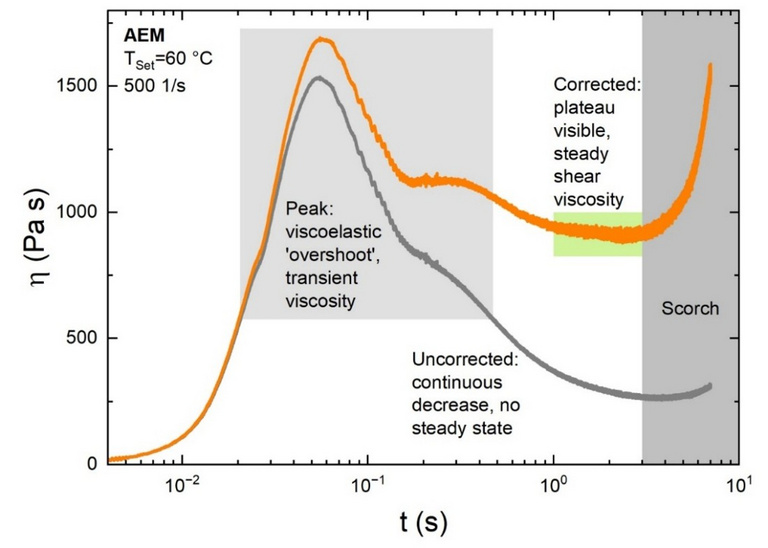 Figure 2: Viscosity over time measured for an AEM compound with a shear rate of 500 1/s at TSet= 60 °C. The acquistion time has been reduced to 0.1 ms so that transient effects at short timescales become detectable. The gray curve describes the uncorrected, the orange one the dissipation-corrected viscosity. In the initial stage, both curves rise continously and the sample response is mainly elastic. At about 50 ms, a peak manifests, the viscoelastic overshoot (light gray background). The dissipative heating leads to a strong decrease of the uncorrected curve in the following, while the corrected curve approaches a steady shear plateau after about 1 s. At timescales beyond 3 s, dissipation-induced scorch occurs and leads to rising curves (dark gray background). The figure is reprinted from a KGK Rubberpoint article 1.
The corrected curve in Figure 2 starts to deviate from the steady shear plateau after about 3 s measurement time and shows a steep rise, as indicated by the dark gray background. Here, the dissipation-induced temperature buildup forces the AEM material into premature vulcanization, i.e., scorch, which is a well-known issue in certain industrial processes. Again, a clear identification of this effect is only possible thanks to the dissipation correction. In the uncorrected curve, the scorch onset is rather vague and could be easily misinterpreted as a steady shear plateau. The process of dissipation-induced scorch is regarded in detail in Figure 3, showing the high-shear measurements of the truck tire compound at 100 °C after a larger storage time. In the upper graph, we see that the corrected viscosity curves measured with 50, 100, and 200 1/s enter steady shear conditions by reaching distinct plateaus after some equilibration time. The 500 1/s curve also shows a plateau region, yet it is abruptly ended by the onset of scorch after about 0.8 s measurement time, indicated through a characteristically rising curve. Again, the dissipation correction of the RPA rotational is crucial for detection, since the effect could be easily misread as a steady shear plateau in the uncorrected curve. The central graph illustrates the temporal evolution of TSample for each measurement. By comparison with the onset of scorch identified for the corrected 500 1/s curve in the upper graph (dotted line), we see that the scorch-prone temperature range starts above 120 °C, as marked by the dark gray background. The sample temperature curve of the 200 1/s measurement only slightly touches this threshold temperature. We therefore see no meaningful scorch effects for this measurement. The difference between measured samples with and without dissipation-induced scorch can be also identified by bare eye, as illustrated by the photographs at the bottom. While the 50 1/s sample remained uncured and shows a smooth surface, the scorched 500 1/s sample shows a rough surface. The continuous rotation shears the scorched material apart, creating rough, ‘crumb-like’ surface structures.
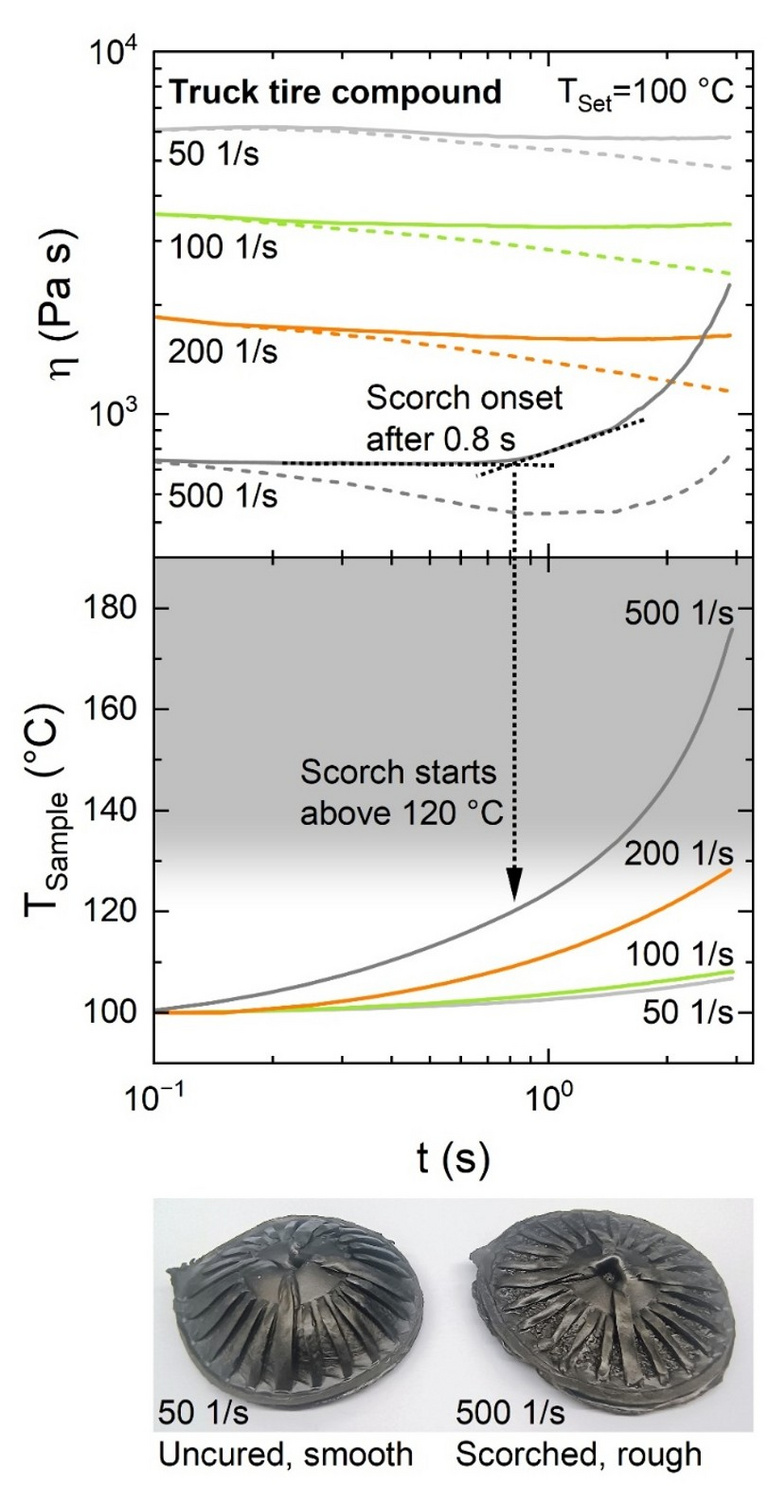 Figure 3: Fast shear measurements of the truck tire compound at 100 °C. In the upper graph, uncorrected viscosity curves are given as dashed lines, the corrected ones as solid lines. For the 500 1/s measurement, a distinct rise in the corrected curve is visible after 0.8 s, indicating beginning scorch. The central graph illustrates the corresponding sample temperatures. The scorch effect occurs at temperatures above 120 °C (dotted arrow), which can be defined as the critical threshold temperature. The photographs at the bottom compare the uncured 50 1/s and the scorched 500 1/s samples after that measurement. Scorch can be visually identified by the rough sample surface. The figure is reprinted from a KGK Rubberpoint article 1.
High shear rates can be reached in basically all kinds of processes in rubber industry. The dissipative heating that inevitably accompanies can become a major threat due to the risk of scorch. Yet, in-line temperature monitoring is usually not sensitive enough to resolve highly localized, non-stationary temperature buildup. The topic can be approached quite theoretically through complex and likely error-prone simulations. Often it is addressed through trial-and-error that can consume large amounts of time and expenses. And due to the lack of data and process insight, these approaches must often start from scratch if the production process is changed. Here, the RPA rotational might offer a new experimental strategy as it precisely measures dissipative heating under continuous shear and applies a respective correction procedure to account for it. As demonstrated, this approach enables us to determine the exact onset time of scorch as a function of the applied shear rate of a given industrial process.
The RPA rotational combines continuous rotation measurements with advanced temperature measurement capabilities and is the first RPA able to determine reliable, dissipation-corrected shear viscosity data. The dissipation correction is not only necessary for correct determination of steady shear viscosities but also plays a crucial role for the characterization of transient effects and shear dissipation-induced scorch. Both these aspects can be studied meaningfully with the RPA rotational, enabling new approaches for time- and cost-efficient, data-driven process design, quality control, and material development.
1. Frey M, Sunder J. Temperature buildup in sheared rubber - Measuring reliable viscosity data and predicting scorch with the RPA rotational. KGK Rubberpoint. 2026;6.