Part II: The benefits of continuous rotation in contrast to oscillation
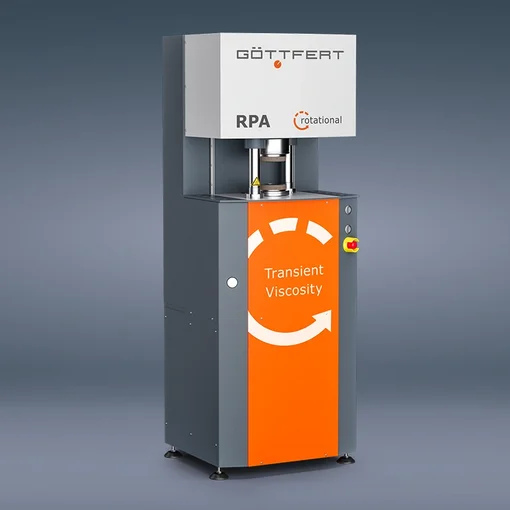
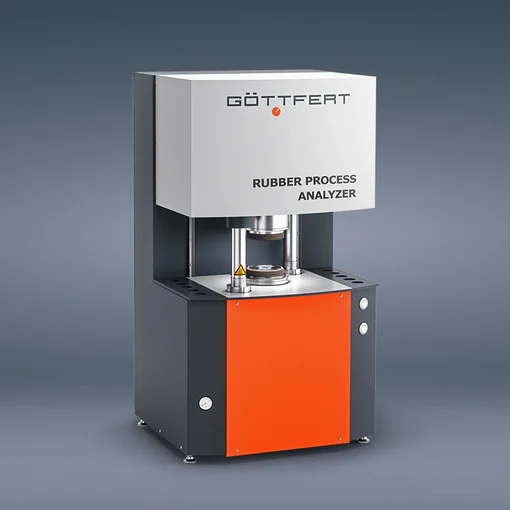
Almost 50 years of experience in the rheological testing of elastomer compounds have led to a new testing instrument – the RPA rotational by GOETTFERT. The Rubber Process Analyzer (RPA) is used to analyze rubber compounds in both the plastic and vulcanized states as well as to characterize crosslinking behavior. In conventional RPAs, the lower die half is driven with a sinusoidal rotational motion (oscillation), while the torque transmitted through the sample is measured at the upper die half. In addition, LAOS (large amplitude oscillatory shear), cure isotherms, temperature sweeps, relaxation, step, or ramp tests can be performed.
The new RPA rotational features a continuously rotating lower chamber equipped with an integrated gradient temperature sensor for determining the temperature buildup created by shear dissipation — a unique feature on the market. Figurec1 schematically illustrates the fundamental difference between conventional RPA designs and the RPA rotational.
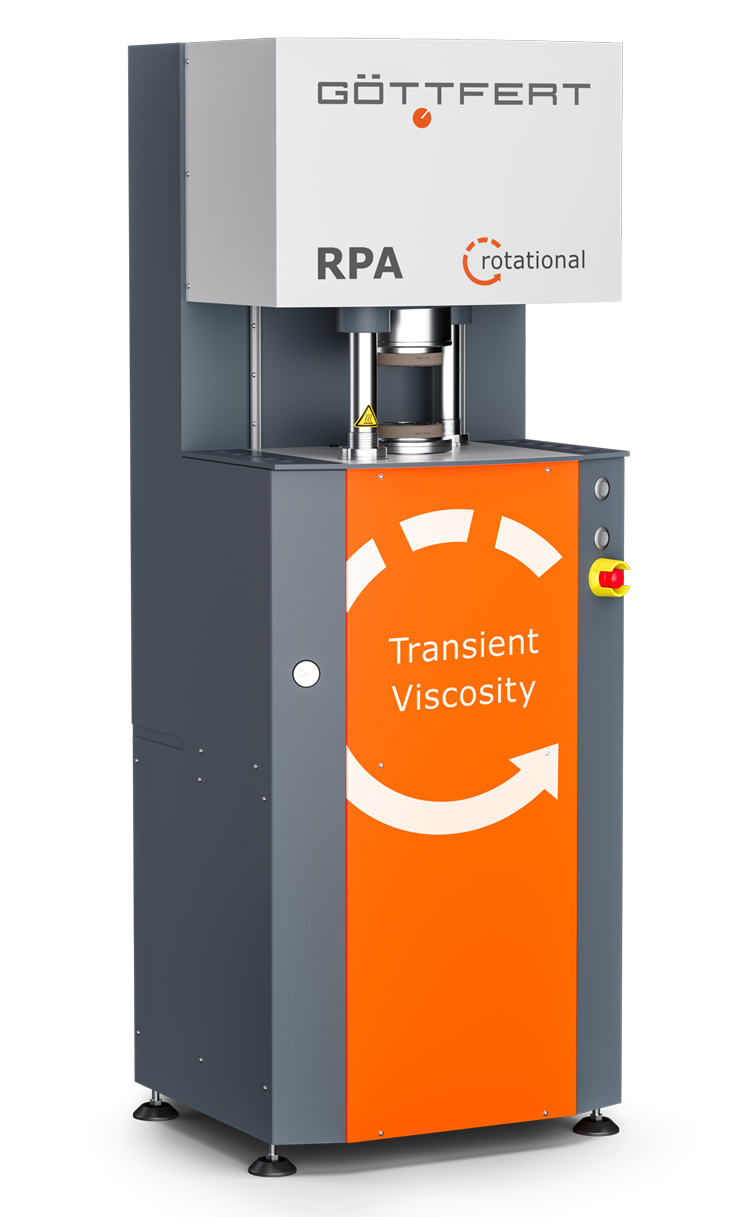
Part II of the RheoInfo on the RPA rotational will compare its novel option of determining the steady shear viscosity through continuous rotation with usual oscillation measurements, which are the typical approach for conventional RPA designs. The benefits of continuous rotation for industrial needs will become clear. We will further compare the RPA rotational with capillary rheometers, which are also capable of measuring steady shear viscosities.
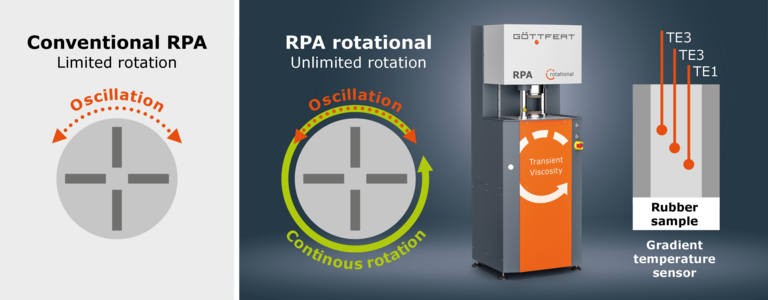 Figure 1: Conventional rubber process analyzers (RPA) are rotational rheometers with limited rotation (left side). Accordingly, measurements are mostly limited to oscillatory stimuli. The RPA rotational (right side) is one of the first RPAs with a moving die that can perform rotations of unlimited amplitude. This creates the possibility for continuous rotation measurements to determine the steady shear viscosity. Thanks to the built-in gradient temperature sensor, the temperature buildup due to dissipative heating can be detected and corrected, allowing for reliable viscosity data even under fast shear conditions. The figure is reprinted from a KGK Rubberpoint article 1.
Continuous rotation is a quite novel feature for RPAs and today, conventional RPAs are still among the most widespread devices in rubber industry and research. Accordingly, viscosity-shear rate plots for rubber materials are usually determined through conventional RPA oscillation measurements. These apply a small oscillatory rotation around a zero position with a certain angular frequency ω. Yet, due to the small amplitude of the oscillatory measurement stimulus, the determined complex viscosity η*(ω) does not directly correspond to the large-scale steady shear processes usually found in industrial practice (mixing, extrusion, injection, calendering etc.). The steady shear viscosity reflects such processes far better and is therefore estimated through oscillatory measurements using the empirical Cox-Merz rule. It states that the modulus of the complex viscosity measured through oscillation equals the steady shear viscosity in case of ω=:

Figure 2 compares oscillatory and steady shear viscosity data for an EPDM (ethylene propylene diene monomer) compound at set temperatures of 80, 90, and 100 °C. Furthermore, steady shear viscosities measured with GOETTFERT RG75 and RG50 capillary rheometers are added. The steady shear viscosities from RPA rotational and the capillary rheometry show good agreement. Yet this only applies for the dissipation-corrected RPA data, since the uncorrected viscosities show distinct deviations from their capillary rheology counterparts in the fast shear regime due to their dissipation-induced pseudo-shear thinning appearance. This again underlines the necessity of the dissipation correction procedure to produce uncompromised rheological data from RPA continuous rotation measurements.
The Cox-Merz rule is challenged by the shown results, as the oscillation data ranges roughly twice as high as both steady shear data sets. While it has been reported that this empirical rule functions well for rheologically simple liquids 2,3, it often finds its limits in the rheologically complex materials frequently used in industry 4,5 like the present rubber compound.
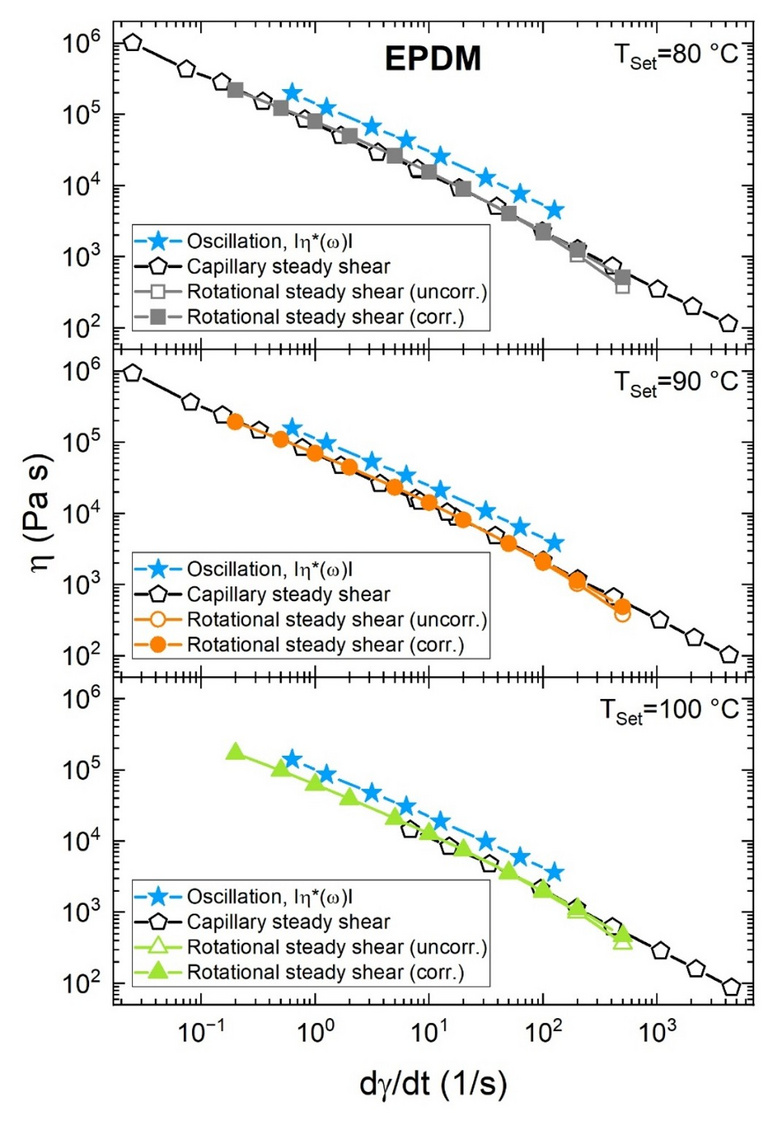 Figure 2: A viscosity data comparison for EPDM at three different temperatures. The blue stars represent the modulus of the complex viscosity as a function of the applied angular frequency, stemming from oscillatory measurements performed with the RPA rotational. The gray, orange, and green data points are continuous rotation steady shear viscosities, shown without (unfilled) and with (filled) applied dissipation correction. The black unfilled pentagons reflect steady shear viscosities determined via capillary rheometry. The figure is reprinted from a KGK Rubberpoint article 1.
Hence, Cox-Merz can be an unreliable approach to model and quantify industrial shear processes like mixing, calendering, extrusion, or injection molding. Dependable rheological methods must mimic the large-scale shear of these processes. In other words, direct measurements of the steady shear viscosities are the most vital alternative, which can be performed with capillary rheology as well as with the RPA rotational in form of continuous rotation rheology with temperature dissipation correction.
The continuous rotation feature of the RPA rotational allows to determine steady shear viscosities, a property that is usually accessed with capillary viscosimeters. This naturally invites a direct comparison between the two device types. On the one hand, continuous rotation with the RPA rotational features an easier-to-use measurement procedure than a capillary rheometer. Furthermore, RPAs are typically used for curing studies and offer all the possibilities that come with oscillatory measurements, like determining the real and imaginary parts of the complex shear modulus or performing LAOS (large amplitude oscillatory strain) studies.
On the other hand, a capillary rheometer can reach higher steady shear rates far beyond 500 1/s. Figure 3 compares the steady shear viscosities of a truck tire compound measured with a GOETTFERT RG75 capillary rheometer with respective dissipation-corrected and uncorrected RPA rotational data. Again, data alignment is only possible thanks to the dissipation correction, as discussed in detail in part I of the RheoInfo. The capillary rheometer can characterize even the most extreme shear conditions in the shear rate range above 1000 1/s. Here, stick-slip effects become visible, which are not resolvable with the RPA rotational.
Furthermore, the capillary rheometers of the GOETTFERT RG series are highly customizable and offer a very broad spectrum of optional add-ons, for example to determine thermal conductivity, die swell, shark skin, normal stress measurements for correlation with processing behavior, or pVT measurements for shrinkage determination.
In summary, both these types of rheometers have different applications, their advantages and drawbacks, and should be seen rather complementary. Corrections are necessary for both devices to obtain precise steady shear viscosity data, may it be the Rabinowitsch-Weißenberg and Bagley corrections for capillary rheometers, or the in part I of the RheoInfo presented dissipation correction of the RPA rotational in continuous shear mode.
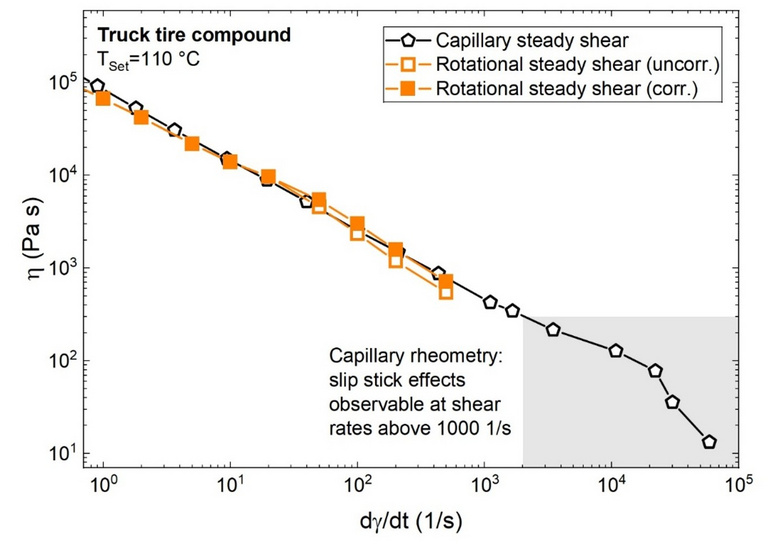 Figure 3: Uncorrected and corrected steady shear viscosities from RPA continuous rotation measurements of a truck tire compound measured at 110 °C in comparison to steady shear viscosities obtained from capillary rheometry. The larger accessible measurement range of the latter allows to identify the shear rate range of instabilities in form of stick-slip effects, which occur beyond 1000 1/s. The figure is reprinted from a KGK Rubberpoint article 1.
The RPA rotational establishes a new generation of rubber process analyzers through its combination of a freely rotating die with advanced temperature measurement capabilities. It is the first device on the market that provides reliable, dissipation-corrected steady shear viscosities over a large shear rate range. The steady shear viscosity adequately reflects the large-scale shear flows that take place in industrial processes. In contrast, conventional RPA devices can measure steady shear viscosity only in a very limited shear rate range or must rely on oscillatory measurements to estimate it with the failure-prone Cox-Merz relation. The direct measurement of corrected steady shear viscosity via the RPA rotational appears as the better, more reliable alternative for industrial needs.
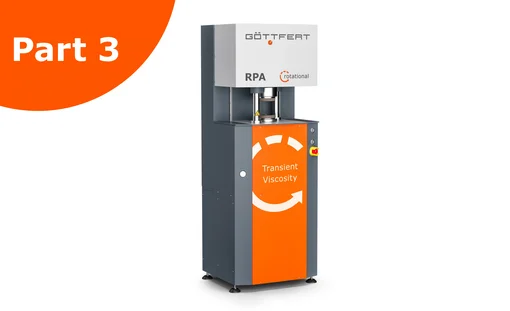
Part III of the RheoInfo on the RPA rotational will demonstrate why and how the dissipation correction of the RPA rotational allows to study transient effects and shear dissipation-induced scorch.
RPA rotational - Part 1
How continuous rotational measurements can be performed easily and corrected for dissipation
RPA rotational - Part 3
How the RPA rotational uses its dissipation correction to characterize scorch problems, among other effects, and enable new solution concepts?
1. Frey M, Sunder J. Temperature buildup in sheared rubber - Measuring reliable viscosity data and predicting scorch with the RPA rotational. KGK Rubberpoint. 2026;6.
2. Bair S, Yamaguchi T, Brouwer L, Schwarze H, Vergne P, Poll G. Oscillatory and steady shear viscosity: The Cox-Merz rule, superposition, and application to EHL friction. Tribol Int. 2014;79:126-131. doi:10.1016/j.triboint.2014.06.001
3. Mead DW. Analytic derivation of the Cox-Merz rule using the MLD “toy” model for polydisperse linear polymers. Rheol Acta. 2011;50(9-10):837-866. doi:10.1007/s00397-011-0550-5
4. Rathner R, Roland W, Albrecht H, Ruemer F, Miethlinger J. Applicability of the Cox-Merz rule to high-density polyethylene materials with various molecular masses. Polymers (Basel). 2021;13(8). doi:10.3390/polym13081218
5. Stieger S, Kerschbaumer RC, Mitsoulis E, et al. Contraction and capillary flow of a carbon black filled rubber compound. Polym Eng Sci. 2020;60(1):32-43. doi:10.1002/pen.25256